
Shark Mart Fish Police Guide: Suspicion and Evidence
How the Shark Mart Fish Police work: suspicion, wanted stars, clue thresholds, interrogation lies, bribes, and the cleaning habits that keep investigators away.
The Shark Mart Fish Police are the consequence system. Every crime, every witness, and every piece of evidence left in the open pushes suspicion higher. At four stars, the investigation needs two clues to close in, which means a single clean room is not enough to erase a pattern.
This guide explains how suspicion builds, what the wanted stars mean, and how to handle an interrogation without making the situation worse. If you have not opened the basement yet, read the Shark Mart basement guide→ first.

What raises suspicion
Suspicion is not a single meter with a single cause. It rises when the store does something a normal convenience store would not do:
- Crime in view of a witness. A customer or officer who sees the wrong thing becomes a problem.
- Evidence left in the open. Blood, remains, packaging, and tools all count.
- Scared fish. A failed fishing attempt can spook the target and raise suspicion.
- Repeated patterns. One messy shift can be explained. Three in a row cannot.
The Shark Mart tips guide→ covers the cleaning routes that remove evidence before it is seen. The short version: clean the route, not just the room.
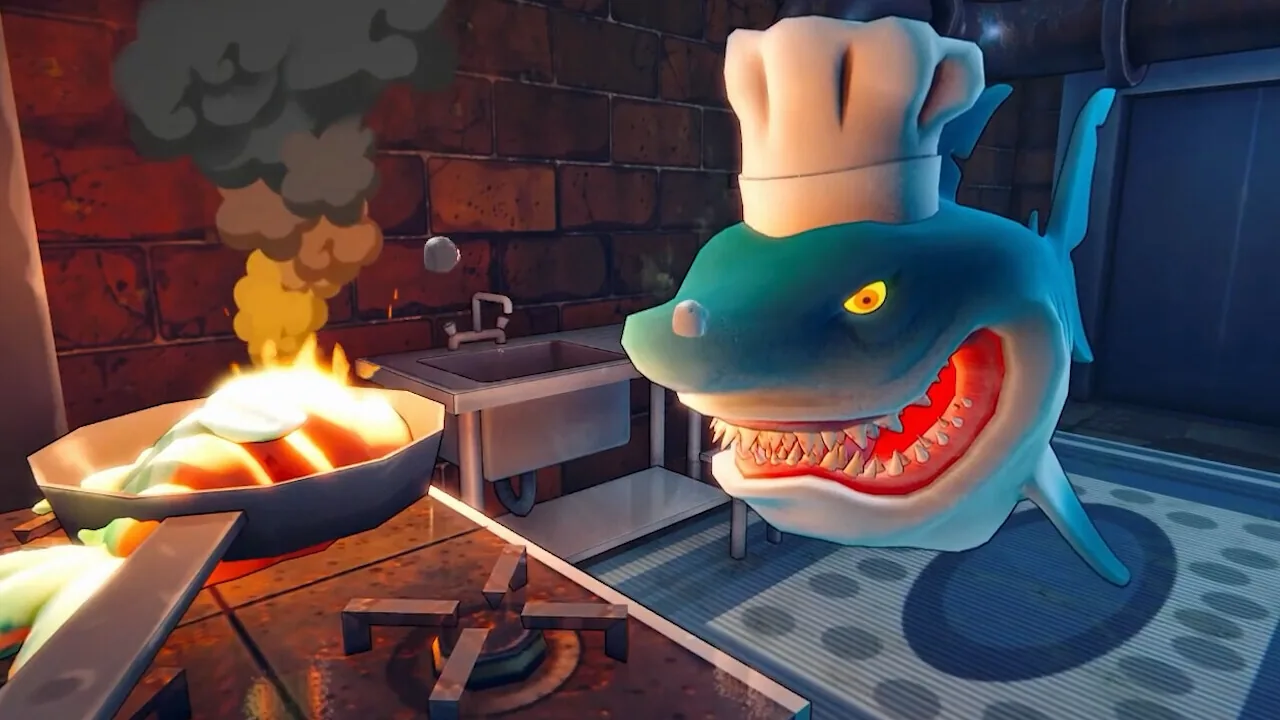
Wanted stars and clues
The store's wanted level is shown in the top-right HUD. It runs from one to four stars. The four-star level is the dangerous one because the investigation requires two clues rather than one.
That threshold changes your defense. At low heat, cleaning the immediate scene may be enough. At high heat, you need to remove every clue the police could use, including the ones you forgot about in the back room.
Do not assume a closed door hides evidence. Investigators can inspect the store, and a trail that leads to the basement is worse than a mess at the front.
Interrogation: when to lie
When the police question you, you can answer honestly or lie. Lying is a tool, not a free pass. It can deflect a weak investigation, but it can also compound suspicion if the officer already has evidence.
A practical approach:
- If the officer has no clue, stay calm and deflect. Do not volunteer details.
- If the officer has a clue, do not build a second lie on top of it. Clean the evidence first, then answer.
- If the store is clean and the family is covered, honesty can be safer. A boring answer closes the visit.
The goal is to end the visit, not to win the argument.
Bribes and influence
The family can take jobs to bribe the most important fish in town. Each fish on the payroll makes the business safer, which is the game's long-term answer to police pressure.
Bribes are not a substitute for cleaning. They reduce the chance that a visit becomes an investigation, but they do not remove a clue that is sitting on the floor. Use them as insurance, not as a cleanup crew.
The evidence checklist
Before you close a shift, walk the route an investigator would walk:
- Front door and entrance mat. The first place anyone looks.
- Aisles and shelves. Blood, broken boxes, and dropped tools.
- Counter and register area. Anything that does not belong in a normal store.
- Hallway to the basement. The most incriminating route in the building.
- Basement stairs and kitchen. Clean the threshold, not just the room.
- Back room and laundry. Dirty loads can hide evidence.
If you cannot clean it, remove it. If you cannot remove it, cover the route and keep the officer away from it. The Shark Mart recipes guide→ explains how the kitchen loop creates evidence in the first place.
Co-op police protocol
In co-op, one player should own the police response. When an officer enters:
- Cashier stays at the register. Normal behavior is the best cover.
- Cleaner clears the nearest evidence. Do not run to the basement if the officer is between you and the stairs.
- Fixer stays out of sight. A player emerging from the basement with a tool is a clue in motion.
Say "police" once, clearly, and let the team adjust. Do not narrate the entire investigation over voice chat while the officer is standing in front of you.
FAQ
How many clues does a four-star investigation need? Two clues. Lower wanted levels need fewer, so the pressure rises sharply at four stars.
Can I bribe the police directly? The bribe system runs through important fish and family jobs rather than a direct payment menu at the door. Build influence before the investigation starts.
Does cleaning remove all suspicion? No. Cleaning removes evidence. Suspicion also comes from witnesses and repeated behavior, which is why the wanted level can stay high after a clean room.
Official source: Shark Mart on Steam ↗ · Steam news hub ↗ · Steam achievements ↗