
Shark Mart Guide: Store Loop, Co-op, and Launch Tips
A start-to-finish Shark Mart guide covering the shop loop, co-op roles, whale washing, basement orders, police heat, and the upgrades worth buying first.
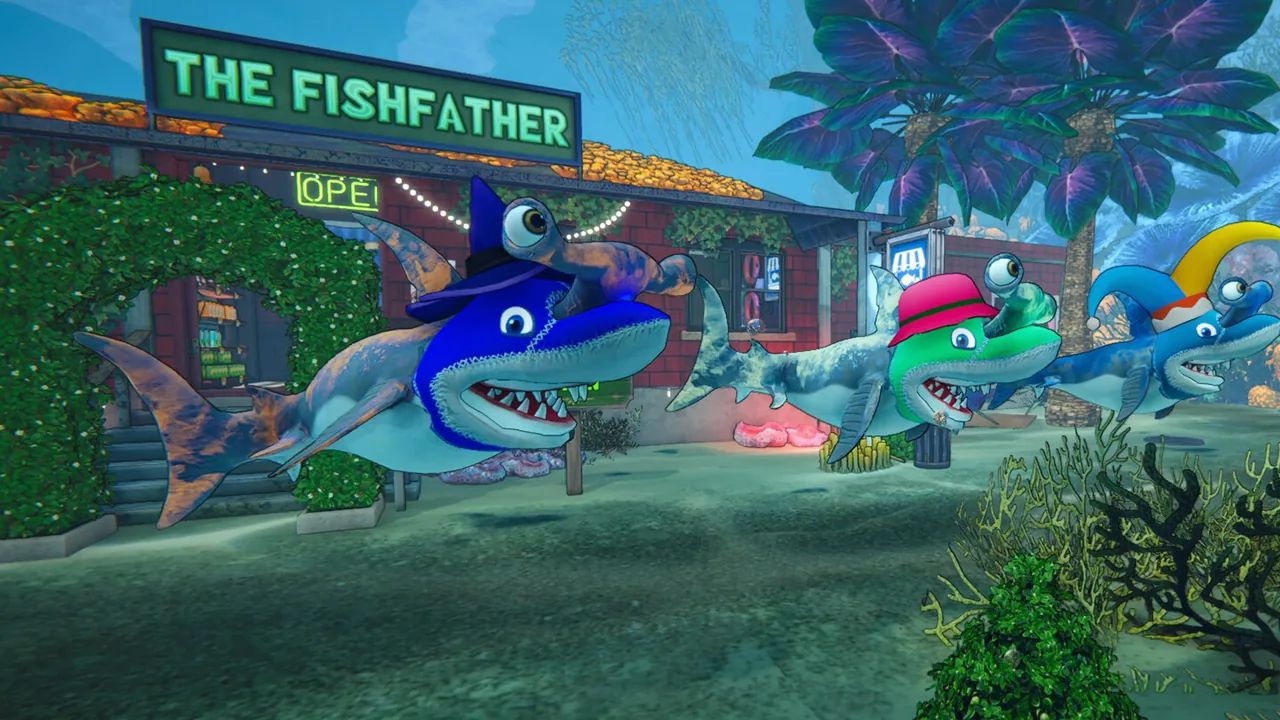
Shark Mart is a first-person co-op shop simulator where sharks in dolphin masks run a convenience store, wash whales for cash, and process the occasional customer in a basement kitchen. The loop is stock, scan, clean, and hide the evidence. This guide maps the whole operation and points you to the deep dives that matter at each stage.
If you are opening the game for the first time, read the Shark Mart beginner guide→ before you spend a single FishBuck. The store punishes clutter and bad shelf placement faster than it punishes bad aim.

What the Shark Mart loop asks you to balance
Every shift splits your attention between three businesses that share one building.
| Layer | What it earns | What it costs you |
|---|---|---|
| Front store | FishBucks from stocked shelves and checkout | Time, shelf space, clean floors |
| Whale wash | Service payouts from washing whales | Soap, tools, station space |
| Basement kitchen | SharkCoins from Chef orders and family work | Risk, evidence, police attention |
The front store is the engine. Shelves need product, the register needs a cashier, and the floor needs someone with a mop before the star rating drops. Whale washing adds a second service queue that can pay better than retail once your tools are upgraded. The basement is the risk layer: it converts the shop's traffic into family business, and it is the fastest way to bring the Fish Police to your door.
That is why a balanced shift beats a greedy one. A store with empty shelves and a three-star rating will not recover by washing one whale. A spotless store with no stock also fails. Treat cleaning and restocking as part of the sales loop, not chores you do after it.
Keep one player on cleanup during rush periods. A spill or a stray box is cheaper to fix immediately than after it has been seen by a customer or an investigator.
Your first hour: stock, scan, clean
Start with the shelves closest to the entrance. Customers path through the store, so a full front shelf creates sales while you learn the register. Buy the shelf you can reach and afford, place it with a clear aisle on both sides, then fill it from the delivery boxes.
The Shark Mart shelf guide→ covers placement and restocking in detail, including how full and empty boxes behave. The short version: do not block the counter, do not put a tall rack in front of a doorway, and do not carry a box you are not about to empty.
Checkout is the next bottleneck. Ring up each customer, watch the queue, and resist the urge to run to the back room mid-transaction. The checkout guide→ explains queue pressure and the manual register. If a customer leaves angry, you lose more than the sale; the star rating is the score the whole store is judged by.
Cleaning comes last in priority but first in consequences. Blood, trash, and loose bricks all count as evidence or hazards. Pick up what you can, bag what you cannot, and keep the route from the front door to the basement clear.
Co-op roles that actually work
Shark Mart supports solo play and online co-op for up to four players. The daily quota scales with the lobby, so a four-player crew is not getting an easier ride; it is getting a bigger one.
A simple role split that holds up:
- Runner: pulls deliveries, breaks down boxes, and keeps shelves full.
- Cashier: owns the register and never leaves the counter during a queue.
- Cleaner: handles spills, trash, laundry, and evidence.
- Fixer: washes whales, fishes, and runs basement orders.
With two players, merge runner and cleaner, then merge cashier and fixer. With three, give the fixer the basement and let the cashier handle whale intake between customers. The Shark Mart co-op guide→ has the full breakdown, including connection caveats.
Whale washing and laundry are not side quests
Whale washing looks like a minigame bolted onto the shop. In practice it is a second revenue stream with its own tools, service problems, and upgrade path. A whale can arrive with several issues at once, and the payout is calculated per service rather than as one lump sum. That makes partial work worth something, but finishing the full service is where the money is.
Laundry feeds the same cleanliness system. Dirty laundry accumulates, the machines take time, and a wire-repair minigame can interrupt the flow. Upgrading the laundry is not glamorous, but it removes a recurring interruption from every shift. The whale wash guide→ and laundry guide→ cover the tool tiers and upgrade order.
The basement is the risk engine
The basement is where Shark Mart stops being a convenience store sim. Customers can be sent downstairs, and the kitchen turns them into product for the family. The exact flow is deliberately grisly, but the mechanics are simple: acquire, carry, process, deliver, and clean up before anyone notices.
Every part of that chain can generate evidence. The Fish Police investigate, and a high wanted level makes ordinary shifts harder. You can lie during interrogation, but a lie is not a reset button. The Fish Police guide→ explains suspicion, evidence, and the four-star threshold, while the basement guide→ covers the kitchen loop.
Do not treat a clean storefront as proof that you are safe. Investigators can pick up evidence that is out of sight, and a single overlooked item can undo several quiet shifts.
Upgrades and automation
FishBucks and SharkCoins pull you in different directions. FishBucks buy store equipment and quality-of-life upgrades. SharkCoins are tied to the family side: tools, laundering, and the stranger investments that make the operation run itself.
Early priorities are boring on purpose: more shelf capacity, a better register, faster cleaning, and the first whale-wash tool tier. Automation comes later, when the store can afford to lose a pair of hands. Hiring a crab to collect trash and upgrading the wash stations are the two upgrades that most directly give you time back.
The Shark Mart upgrades guide→ compares the two currencies and lists the achievements tied to each. If you want the shortest version: buy capacity before cosmetics, and buy cleaning before another revenue stream.
What to read next
This page is the hub. The Shark Mart wiki→ indexes every system if you already know what you are looking for. If you are still deciding whether to buy, the game overview→ explains the premise and tone without spoiling the loop.
FAQ
Is Shark Mart playable solo?
Yes. The store supports solo play, and the daily quota scales down for a one-player lobby. Co-op is the intended experience, but nothing in the core loop requires a second player.
How many players can join a Shark Mart store?
Up to four players can run the store together in online co-op. The quota rises from three items at one player to six at four players, and fish and whale spawn intervals also scale with lobby size.
Do I need to play the demo before the full game?
No. The demo was a separate pre-release build, and progress does not carry into the full game. The launch version includes more stock, more customization, automation, and the complete family progression.
Official source: Shark Mart on Steam ↗ · Steam news hub ↗ · Steam achievements ↗