
Shark Mart Tips: 12 Habits for Cleaner, Faster Shifts
Twelve practical Shark Mart tips for faster shifts: shelf layout, checkout discipline, cleaning routes, whale washing, police heat, and co-op communication.
Most Shark Mart failures are not dramatic. They are a shelf placed one tile too far, a cashier who left the register, or a stain that nobody mopped until an investigator noticed. These twelve tips are the habits that separate a store that survives a busy shift from one that collapses the moment a whale arrives.
They assume you know the basic loop. If you do not, start with the Shark Mart guide→ and come back when the store is open.
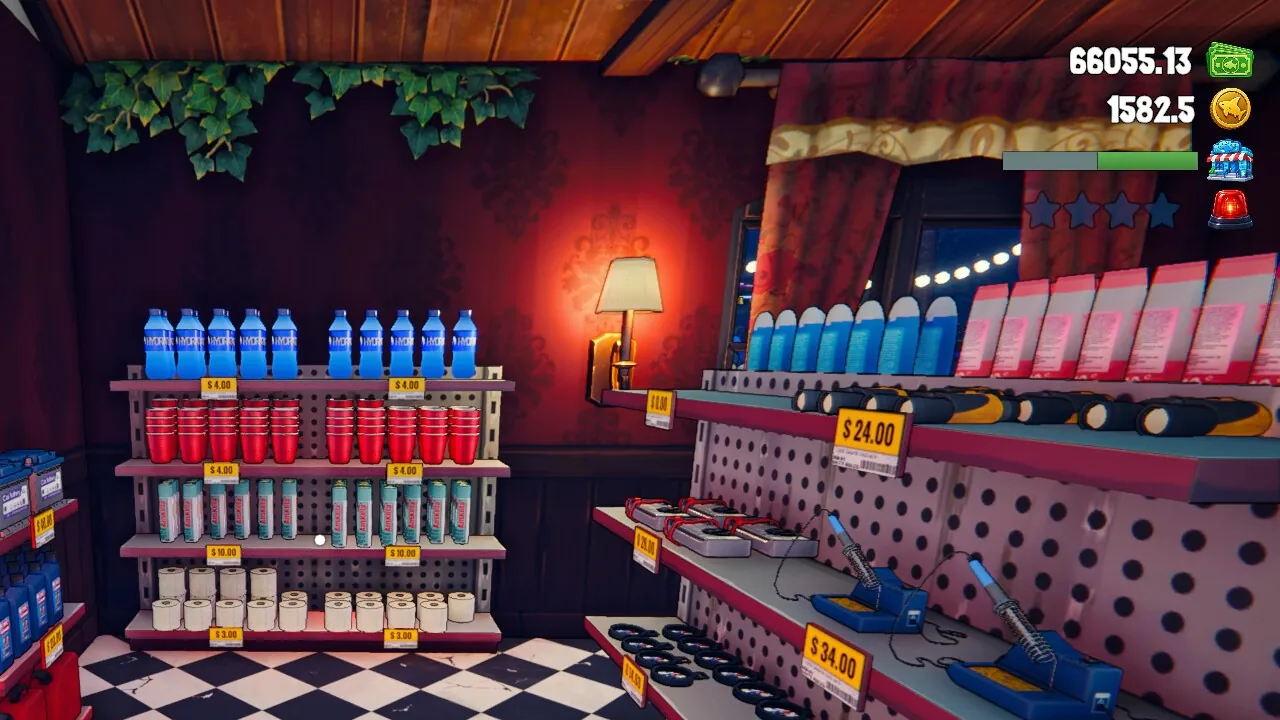
Layout and stock
1. Build aisles, not walls. A shelf is only useful if a customer can walk to it. Leave a full tile of clearance on the product side, and never place a shelf so it narrows the path to the register.
2. Keep the front shelf full. Customers see the entrance first. A full display at the door creates sales while you are busy in the back.
3. Break boxes immediately. Empty boxes are clutter, and clutter becomes evidence or a pathing problem. If you cannot break a box down, move it out of the aisle before you do anything else.
4. Buy capacity before variety. A second shelf that holds the same product is better than a new product line you cannot keep in stock. The shelf guide→ explains the slot differences.
Checkout and queue
5. One cashier owns the register. Do not tag-team the counter. A single player who stays put is faster than two players who keep switching.
6. Watch the queue, not the scanner. The register tells you what you are scanning. The floor tells you what is about to go wrong. The checkout guide→ covers queue pressure in detail.
7. Never start a transaction you cannot finish. If a whale or a family job interrupts, finish the customer first. An abandoned transaction costs more than a delayed service.
8. Keep the counter approach clear. Customers need space to reach the register. A display placed too close to the counter turns a queue into a traffic jam.
Cleaning and risk
9. Clean in routes, not spots. Start at the entrance, work toward the counter, then move to the back. A route catches spills you would miss by cleaning whatever is closest.
10. Treat every stain as evidence. The store does not distinguish between dirt and a crime scene when the police arrive. If you cannot clean it, bag it, hide it, or remove it. The Fish Police guide→ explains what happens when you fail.
11. Do not let laundry pile up. Dirty laundry is a recurring chore that becomes a crisis if you skip it for several shifts. The laundry guide→ covers the machines and the wire-repair minigame.
A clean front door does not mean a clean store. Investigators can find evidence in back rooms, on the route to the basement, and on the floor behind the counter.
Service and co-op
12. Finish one service before starting another. A half-washed whale pays less than a completed one, and a half-processed order leaves a mess. Depth beats multitasking.
In co-op, add one more habit: say what you are doing. "I have the register" prevents two players from abandoning the front at the same time. "Basement clear" prevents someone from walking into an investigator with evidence in hand. The Shark Mart co-op guide→ has role splits that make this natural.
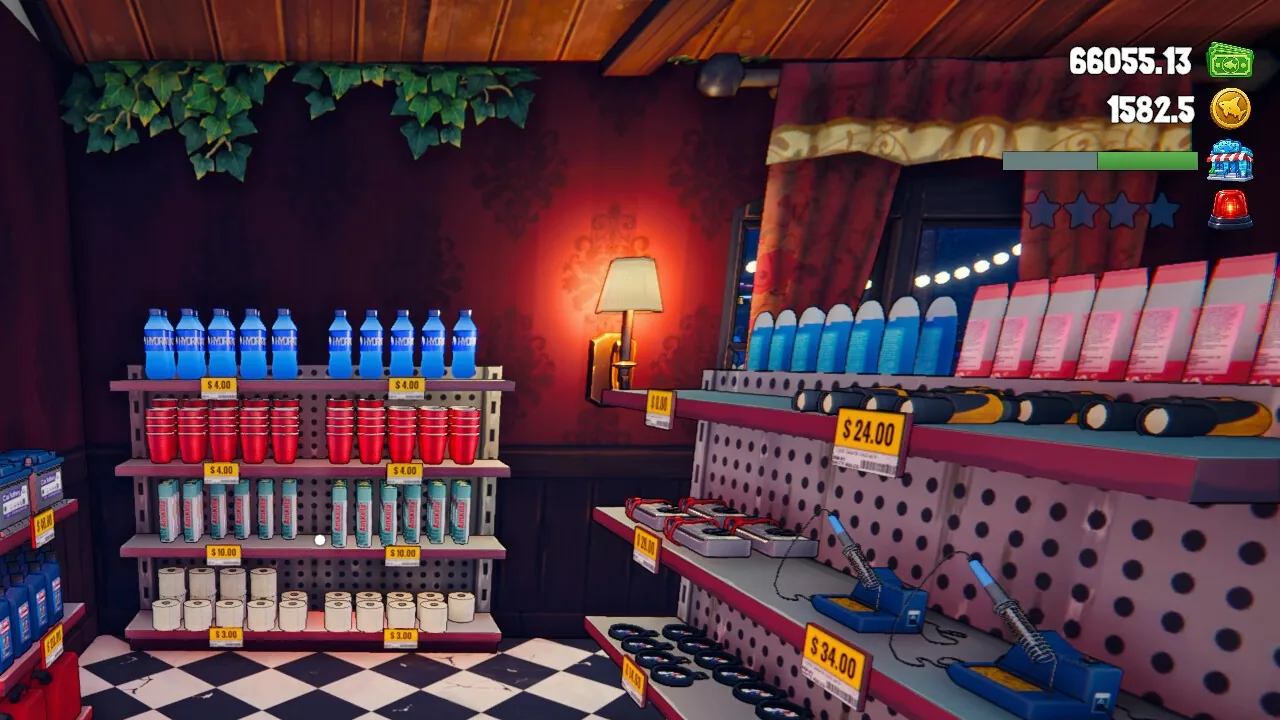
The habits that matter most
If you only change three things, change these:
| Habit | Why it matters |
|---|---|
| Keep one player on the register | Queue collapse is the fastest way to lose a shift |
| Clean before restocking | Star rating affects everything else |
| Finish one upgrade path | Scattered spending leaves every system half-built |
The rest of the list is optimization. These three are survival.
A five-minute pre-shift routine
Before you open the store, walk the route a customer will take. Check the entrance, the aisle, the counter, and the path to the back room. If any of those four points is blocked or dirty, fix it before you unlock the door. This routine costs less time than recovering from a bad shift.
FAQ
What is the most common beginner mistake in Shark Mart?
Buying too many systems at once. A store with a wash station, a fishing rod, and an unfinished basement is a store with three unfinished jobs and one cashier.
Does cleaning really affect the star rating?
Yes. The star rating is the store's overall performance indicator, and mess is one of the inputs. Keeping the floor clean is cheaper than repairing a damaged rating.
Should I play with friends or solo?
Solo is the better learning environment. Co-op is the better show once you understand the loop, because the quota scales and the roles become meaningful.
Official source: Shark Mart on Steam ↗ · Steam news hub ↗ · Steam achievements ↗